Showing posts with label parents. Show all posts

Thursday, September 3, 2015

More Than A Toy


For a child to develop physically and emotionally, playing is of vital importance. After the first year during which the parents' main priority is learning motor functions like standing upright, social play based tasks become the main task in a child’s life.


At this foundational stage, kids learn through play and as such, most therapy approaches use play as a medium of impact.


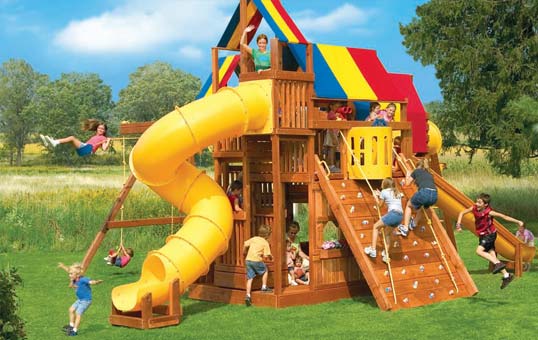
Toys are tools we use in Therapy to facilitate therapeutic play.When children create a make-believe world through play; for example, using toys to build a tower of blocks or race a friend to the top of a hill, they acquire the social and intellectual abilities needed to be successful in school even up to adulthood.  Nearly all meaningful play includes toys.


 A single, engaging toy can transform a child’s play from simple to academic, from repetitive to inventive, from solitary to social. Toys can be activated by switches, voice, proximity, touch, mounts and splitting.
 

There are many do-it-yourself adaptations that can be made by therapists or parents.
Creativity is needed by adults and children alike.


Toys for gross motor development includes, trampoline, bicycle, scooter boards, matching band/drum set kits, exercise balls which are great popular toys to get those arms and legs moving in a fun way as their body grow stronger.


This promotes balance and, ideal for kids with special needs and group social play activities.


Fine motor skills involve the small muscles of the body that enable such functions as writing, grasping small objects, and fastening clothing. It develops as the neurological system matures.


The level of development of fine motor control in children is used to determine the developmental age of the child.


Fine motor control requires awareness and planning to complete a task. It also requires muscle strength, coordination and normal sensation.


Tasks such as stacking blocks, cutting out shapes with scissors, drawing lines or circles, tearing paper, buttoning a button, and holding and writing with a pencil can occur only if the nervous system matures properly.


Your child’s fine motor development is a very important part of their physical skill set. He/she needs to learn to use their hands competently in order to manipulate toys and to acquire self-help skills such as feeding and dressing.


Play is a child's "work" and it is a very important part of their physical development. Babies and young children need to have ample opportunity to play. By the age of 6 years, a child's fine motor skills have developed sufficiently enough to complete writing, dressing, and feeding tasks adequately for the average child.


They will have enough bilateral coordination, eye-hand coordination, and dexterity to complete cutting and writing tasks. Children will continue to develop and improve these skills, but the groundwork needs to be developed and established within the first six years.


This is why a child will need toys, games, and activities to perform and improve these skills during his early childhood. Fine motor skills are important in most school activities as well as in life in general.


Weaknesses in fine motor skills can affect a child's ability to eat, write legibly, use a computer, turn pages in a book, even to perform personal care tasks such as dressing and grooming.


Toys for improving fine motor include, crayons, lego bricks, beading and lacing sets, markers, plastacine sets, all pretend play sets (barbershop, make up set, playing Doc set, Kitchen, work tool bench) are great fine motor activities.


For more you could visit the Sensory care Therapy Shop.
The sensory care therapy shop


Image courtesy:  pinstopin.com, forthemommas.com, parentinghub.co.za, zmescience.com, picsant.com, alibaba.com, dailymail.co.uk, wonderbaby.org, reallookautism.com, sensationalkidsot.com.au, citytheorist.com, kidbility.com, themommytalks.com, cliparthut.com, tsxmsc.com, offset.com, creativegardenschools.com, learning-difficulties.blogspot.com, thespiritscience.net, popsugar.com. b57d13e35bad3848709750de2b297a349f54c3dcaf31c14044

Saturday, November 1, 2014

Choosing a school for your special child


Impressive right? well, as we say in Nigeria, "No be by dat wan abeg..." There are a lot of things to consider when picking a school for your child.


In Nigeria, children with special needs can be enrolled in a main stream class with additional supports, in a support class in the school, in a special school or center affiliates. Parents need to explore each option and decide on what they feel is most appropriate.

Guide and Checklist for Choosing a School.

As more and more people are agitating for inclusive education for special needs kids. It is imperative for parents to look for mainstream schools with good special education programs.


There are a lot of schools that seem to be offering these services but are they effective?


A parent lamented on the fact that her son has really regressed after a term in a mainstream school in Nigeria. A therapist complained about the way the teachers and cleaning staff ignored the child and expected her to see to the child’s needs. The child, a 3 year old with budding cognitive abilities who just started gaining speech was placed in the toddlers unit. It was with reluctance, after several meetings that she was then moved to a higher class.


Parents should consider the following tips and checklists in choosing a school for their kids.
Plan as early as possible in developing checklists of what you expect of a school for your child.
Visit websites of schools and ask parents with Special needs their opinion on schools.
Visit each school’s open day and talk to the principal of the school.


 School Culture and Inclusion
• Does the school culture fit with your child?
• Did the principal and staff seem genuinely supportive?
• Does the school philosophy specifically acknowledge different abilities and learning styles?
• Do you feel that the school staff will understand your child’s needs?
• Are there signs of inclusion?
• What programs are in place to effectively deal with bullying
• How many children with disabilities (or receiving additional funding) does the school currently
• Is the parent community supportive and involved?


 Class Size and Teaching strategies
 Are your child’s capabilities, strengths and challenges understood?

• Is there one staff member who has overall responsibility for the children with special needs        (e.g. Learning Support Teacher) and do they allow for parents to hire a shadow special education therapist to be with the child?


• Does the school have access to therapists (e.g. occupational therapist, speech therapist etc)?
• Do staff members undertake professional development in disability?
• What is the student to teacher ratio for all classes?


Is there a quiet place for one on one therapy follow-up session with his personal therapist or to calm the child down if he/she experiences sensory overload or melt downs?


Is there a general consensus by the parents and the child’s educational team to use the IEP
  [an individualized plan] for the child?

Do you think the IEP addresses the child’s challenges and will bring a positive outcome?
Are there Therapy materials in carrying out the IEP of the child?

What type of Assessment is being done?
Is it too structured or is it flexible enough to take into cognizance, the child’s challenges and progress attained?

Additional Services


Does the school have an introductory program to assist children transitioning into the school or an organized transition program for children moving from primary to secondary?
• How structured (prescriptive or open-ended) is the curriculum? Is there enough flexibility? How does the school support those students needing additional support in transport etc?
• What does the curriculum offer beyond the statutory subjects? Co-curricular activities?


• Does the school offer clubs, interest groups, etc?
• Do all students have access to specialist facilities (e.g. library, art rooms, science and technology laboratories, etc)?


What are the strategies in narrowing it down to the child so that learning takes place?


Social Skills and Inclusion.
Are the school grounds safe and secure?
What other signs of inclusion do you see?
Are there structured activities at lunch time and break time to encourage social skills and inclusion?


.........No comment.........

Image courtesy: logbaby.com, techloy.com, www.adeadegbiteschools.com, www.nairaland.com, meadowhallschool.org, www.coface-eu.org, helenogradydramaacademy-lagosislands.blogspot.com, www.stlouissisters.org, e4pr.blogspot.com, www.vanguardngr.com, woodlandschoolsng.com, www.thethresholdschools.com, www.loyolajesuit.org, www.ondostate.gov.ng

Sunday, September 21, 2014

Watch that Splint


I promise this is an interesting topic...

After the Hip Ankle Foot Orthosis (HAFO) was made for Dewunmi who had severe Hemiplegia caused by Cerebral palsy, his mom was so excited but Dewunmi did not like this extra load and inconvenience. He was cranky all through the fittings. 


"Madam I need you to wear him at least 8 hours daily and we have to be consistent because the more he wears it, the better to prevent gradual joint stiffening."

She replied, "Don’t worry, trust me he will wear it even to sleep."

"Ahh!!! No o! Madam this is not a night splint and it could be very uncomfortable, 8 hours is very ok for his age."

After a month, we noticed sores on Dewunmi’s caudal region, I immediately knew that she had ignored my instructions. The HAFO had caused uneven pressure on the caudal bony prominence which had resulted in the development of the sore.

This is why I decided to write a short post on splinting.


Splints and orthosis are temporary devices in neurology used to correct or ensure proper anatomical positioning and sometimes movement and also prevent joint stiffening and subsequent deformity especially for spastic children. It also helps to reduce risk of injury, improve mobility performance and stabilize the joint.

How do Orthosis or splints work?
They work by applying forces to the body. By encompassing parts of the body and preventing movements, muscles and joints can be stretched. Many muscles cross two joints (for example, the calf muscles cross both the ankle and knee). 


To exert stretching effect, either both joints must be held by the device or activities that stretch the joint (passive and active exercises) not in the device should be encouraged. 

Splints and orthosis can also provide stability to help some children stand and walk. 


This is the bio-mechanical explanation of how the device works. 

Materials used include high temperature thermoplast, neoprene and even lycra garments etc.


The following considerations must be properly adhered especially at first fitting and through out the day:


1. Ensure that the splints are well contoured.

2. Always maintain Anti-deformity position (proper body alignment)


3. Snugly position and tighten straps to allow blood flow or veinous return (not too tight, not too      loose).

4. If the splints are too tight or inappropriately placed, circulation is compromised.


5. If a child cannot monitor the status of the affected area, Parents should be instructed to examine the body part for evidence of muscle strain, swelling, redness or sores between straps or muscles around the region.


6. Allow motion out of the splint at periodic interval (parents should learn some passive exercises to perform at these intervals).

7. Avoid or minimize bony prominence.

Foreign Pre-formed Splints
A lot of parents prefer the foreign splints because of the materials and its aesthetic beauty but they have the challenges of “one-size fits no one”  and as such, still have to be custom-fitted by a really experienced Occupational Therapist or Physiotherapist and Orthotist.


Lastly, Orthosis are never an answer in themselves but in many cases they are an extension of the therapist’s arm while away from hands-on active treatment.

The usual trend is this, when a splint, orthosis or an assistive device is made for a child, the parents are usually excited and are consistent within the next few months or weeks, after then, they start faltering, becoming inconsistent with some even totally stopping. 

I understand this because I also see this trend in myself (with abstinence from junk food) but for the device to do what it’s made to do, there has to be consistency and proper adherence to the rules.


Image courtesy:  arthritisbroadcastnetwork.orgwww.nopcoclinics.com, www.oandp.org
                            haydentrigg.blogspot.com,  www.wannatowel.com, orthoinfo.aaos.org
                            www.dailymail.co.uk, www.ncmedical.com, www.splints.co.za

Saturday, May 24, 2014

Teen Carries Brother With Cerebral Palsy.

A terrific story of Family support, power of love and sibling bond

Posted on May 14, 2014


Image courtesy of Google Images and The Huffington Post


Braden Gandee is a 7 year old boy who has trouble walking on his own, but his older brother is there 
 to carry him --- and to fight for his future. Hunter Gandee who is 14 years old, actually carries his 
younger brother Braden who has cerebral palsy. Braden usually walks with the assistance of a walker. If you are not familiar with cerebral palsy, it is a neurological disorder that affects body movements and muscle coordination.
In their hometown, Hunter took it upon himself to educate the people about Braden's condition. On June 7th and 8th, he will carry his brother 40 miles to demonstrate "the physical and mental challenges faced everyday by those affected by cerebral palsy" reported The Huffington Post.


The walk will be difficult, but Hunter and Braden will have their parents drive along the route with them for support. Hunter, who is a wrestler for his high school is fairly strong and has had plenty of practice over the years carrying his brother. "I wrestle, I know what it is to work hard, but it's nowhere near how hard he has to work everyday" Hunter told The Huffington Post about his brother.
Hunter is not just doing the walk for his brother, but to help raise money for the Cerebral Palsy Research Fund. By doing this, Hunter hopes to improve the quality of life for everyone with cerebral palsy.


 Nigerian Parents with special needs kids should know that nurturing and taking care of the marriage is very important. A broken family would hurt a special needs child even further. All family members should pitch in to help give the parents some time to spend alone even if it is only a few hours for a special dinner,outings from time to time.

 Moreover, a typical healthy sibling needs a lot of support as well in the family of a special needs child. I often refer to these kids as “silent victims”, needing a lots of reassurance. Parents need to make sure that each have some alone time with the typical sibling, to discuss issues, watch a movie or just play a game with them so they know they are important too and so they don’t resent their sibling and offer support to him.

Culled from abcnews.go.com

God only gives Special Kids to Special families.